
We Build Software for the Maritime Community
Key Port is a maritime technology company founded by terminal operators. We build software designed to improve incident rates, collaboration and efficiency and, in turn, the lives, relationships and everyday experiences of the hard-working members of the maritime community.
The waterfront has been ignored
For decades, the maritime industry has been forced to manage high-risk operations using generic software never designed for the realities of ports, terminals, vessels, and marine logistics. Most enterprise platforms serving the industry today were built for broad horizontal markets — manufacturing, construction, warehousing, or corporate administration — and at times adapted to maritime through time consuming expensive layers of customization and workarounds.
The result is predictable: low adoption, fragmented processes, disconnected data, and operational teams forced to rely on spreadsheets, radios, paper procedures, and tribal knowledge to get the job done.
KeyPort was founded on a singular truth: when software ignores the realities of the industry, the workforce ignores the software.
Instead of forcing maritime operators to adapt to generic systems, we built KeyPort exclusively for the maritime community — purpose-built from the ground up for the people managing operations in terminals, onboard vessels, and across port ecosystems every day.
The result is a platform operational teams actually use — because it speaks the language of the industry, aligns with real-world workflows, and supports the mission-critical nature of maritime operations without compromise.

Product 01
SafePort®:
The Maritime Standard
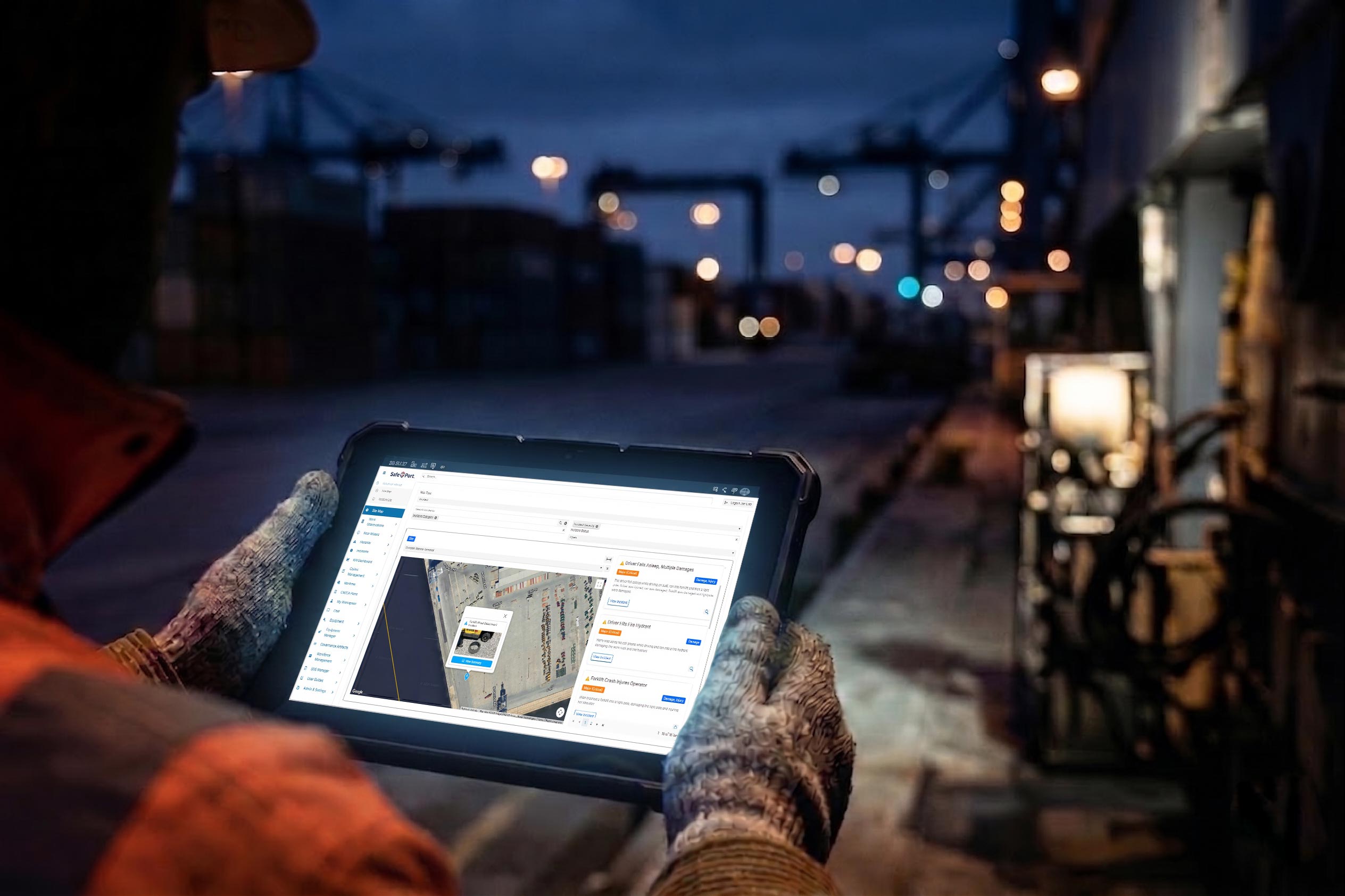
Our flagship deployment, SafePort, tackles the most critical operational liability on the dock: safety and compliance. SafePort is the first exclusively port-native safety and compliance platform engineered from the ground up for maritime terminals.
We built SafePort to enforce Organizational Discipline. Your policies and procedures were built with care and approved for a reason—they should not die in a dusty binder. SafePort routes workflows directly through your established rules, ensuring briefings happen, inspections get logged, and corrective actions close out exactly the way they're written.
Keyport Leadership
Behind the Code
We didn’t build SafePort from theory—we built it from experience. The people shaping our platform have lived the realities of terminal operations firsthand. We understand how hazards impact production, how vessel delays ripple across an entire port, and how labor, compliance, and operational pressure intersect every hour on the dock.
That perspective changes the way we engineer software. Instead of forcing terminals to adapt to generic systems, we design technology around the workflows operators already trust. Every feature is informed by real-world operational discipline: the pace of the shift, the complexity of the labor environment, the importance of safety accountability, and the need for decisions that hold up under pressure.
Our architecture is shaped by people who have run the shifts, managed the risks, and carried the operational responsibility. The result is software that feels less like a tool built for the industry— but a tool built from within the industry.

Prior to KeyPort, Joseph directed stevedoring operations across bulk, break-bulk, RoRo, and heavy lift cargo environments. His firsthand experience managing terminal workflows, maritime security, labor coordination, and environmental compliance shaped the operational philosophy behind the code. Rather than designing software from abstraction, he translated the realities of port operations directly into the platform’s architecture—ensuring every workflow reflects the pace, accountability, and discipline required on the dock.

Harry has spent the last 35 years overseeing EHS compliance — first writing and enforcing the rules, then living with those rules on the operations side. At Maryland Department of Environment, he led the transition from paper forms and spreadsheets to a fully electronic compliance management system — the same problem SafePort solves for many terminal operators today, at a level of operational depth no horizontal platform delivers. He brings that dual perspective to SafePort, shaping its architecture so the documentation a terminal produces is the documentation an inspector expects to see.
Ready to See the Code?
The founders’ operational background informed one of SafePort’s core design principles: company-wide adoption.
The most powerful software fails if it disrupts operations or creates friction for the workforce expected to use it. SafePort was intentionally built to align with how terminals already operate—making workflows intuitive, reducing resistance to change, fostering teamwork, and driving consistent usage across every level of the organization.
The result is a platform designed not only to support compliance, but to become part of the daily operational rhythm of the terminal.